Symptom guide · Nose and airways
My dog keeps sneezing: what might my vet investigate?
An occasional sneeze is normal. Sneezing that keeps happening — especially with discharge, bleeding or noisy breathing — is worth discussing with your vet. Most dogs start with a careful history and examination, and further tests are usually only considered if the cause isn't clear or the problem continues.
Draft — awaiting clinical review. This guide is an introductory draft. It hasn’t yet been approved by a named clinical reviewer and is hidden from search engines until it has.
When to contact your vet
Draft guidance awaiting clinical review. If you are unsure, always contact your vet — they can advise how urgently your pet should be seen.
Contact a vet immediately if
- Your dog is struggling to breathe, breathing with their mouth open at rest, or their gums look pale, grey or blue
- A nosebleed is heavy, won't stop, or keeps coming back
- Sudden, violent sneezing with pawing at the nose — for example after a walk through long grass
- Your dog collapses, is very weak, or seems in significant pain
If your practice is closed, call their out-of-hours service.
Book an appointment with your vet if
- Sneezing continues for more than a few days, or keeps returning
- Discharge from one or both nostrils — particularly if it is thick, coloured or bloody
- Swelling of the face or nose, or a change in the shape of the muzzle
- New snoring or noisy breathing, reduced appetite, or your dog seems unwell in themselves
Is it a sneeze or a 'reverse sneeze'?
A normal sneeze pushes air out through the nose. It helps clear dust, pollen or other irritants and is usually nothing to worry about if it happens now and again.
A reverse sneeze looks and sounds quite different: your dog may stand still, stretch their neck and make a loud snorting or honking sound as they pull air in quickly. Episodes usually pass within a minute. Reverse sneezing is common and often harmless, but it can be alarming the first time you see it.
Why might a dog keep sneezing?
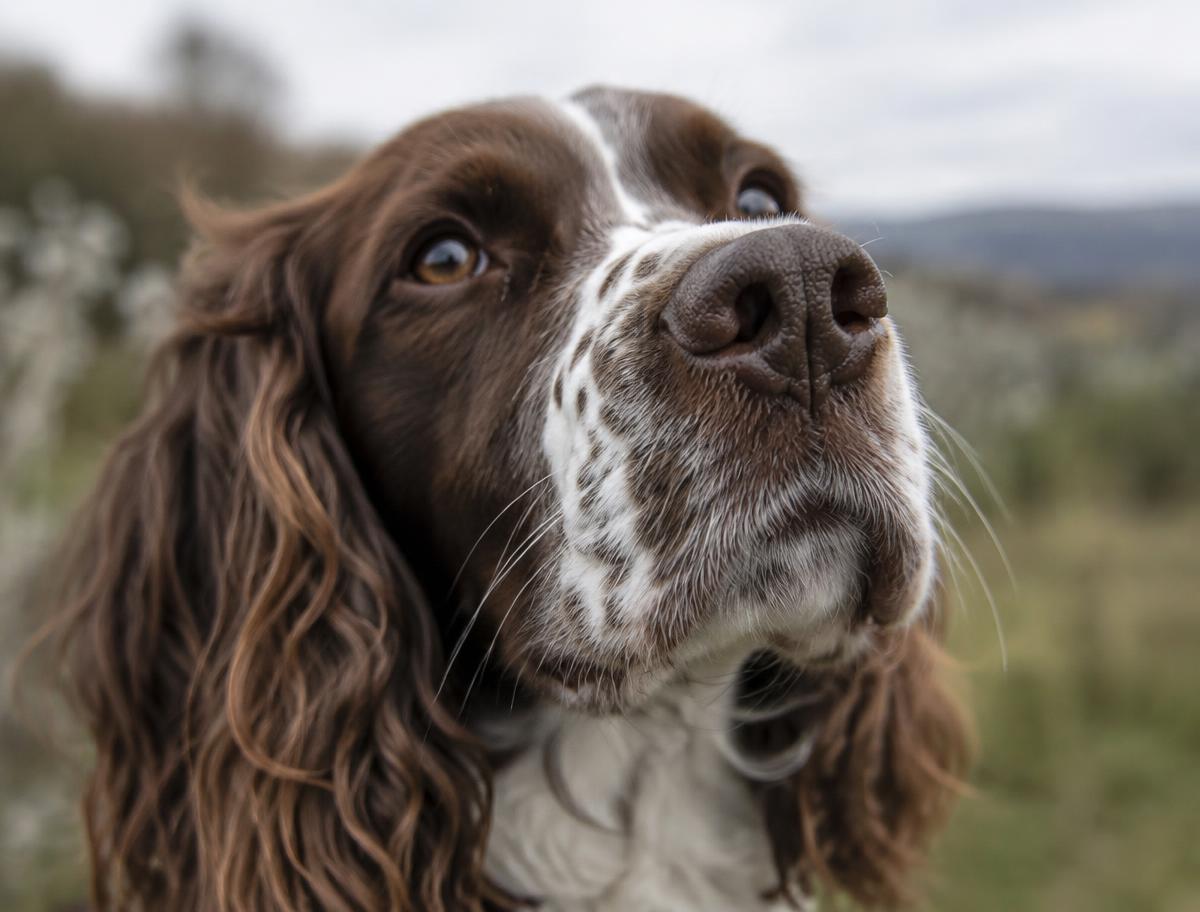
The nose is lined with delicate tissue that reacts quickly to anything unusual. Many different problems can cause sneezing, and some are much more common than others. Possible causes include:
- Irritants such as dust, smoke, strong scents or pollen
- Something stuck in the nose — in the UK, grass seeds (awns) are a well-known example in summer
- Infections, which may be viral, bacterial or fungal
- Inflammation of the nasal lining, sometimes linked to allergies or to longer-term 'rhinitis' (inflammation inside the nose)
- Dental disease, as the roots of some upper teeth sit very close to the nasal passages
- Nasal mites, which are uncommon
- Growths inside the nose, which are less common and more likely in older dogs
Image placeholder
Nasal anatomy
What your vet may do first
Your vet will usually start by asking questions. How long has the sneezing been going on? Is it getting worse? Is there discharge from one side or both? Has your dog been somewhere grassy recently? Any change in appetite, energy or breathing?
They will then examine your dog — looking at the face and nose, checking airflow through each nostril, looking in the mouth and at the teeth, feeling the lymph nodes under the jaw and listening to the chest.
For many dogs, this is enough to decide on a sensible next step. That might be treatment, a period of monitoring with a planned check-up, or further tests. There isn't a single 'correct' route — it depends on your dog and what the examination shows.
Tests your vet might consider
If sneezing persists, or there are signs such as one-sided discharge, nosebleeds or facial swelling, your vet may suggest investigations. These are chosen to answer specific questions, so not every dog needs every test.
- Blood tests
- Check general health before an anaesthetic. If there are nosebleeds, tests of blood clotting and blood pressure may also be suggested.
- Mouth and dental examination
- A thorough look at the teeth and gums, often under anaesthetic, to check for dental causes.
- X-rays
- Can show some changes in the nose and teeth, but the overlapping bones of the skull make fine detail hard to see.
- CT scan
- Builds a detailed, three-dimensional picture of the nose, sinuses and surrounding bone. Usually needs a general anaesthetic or heavy sedation.
- Rhinoscopy
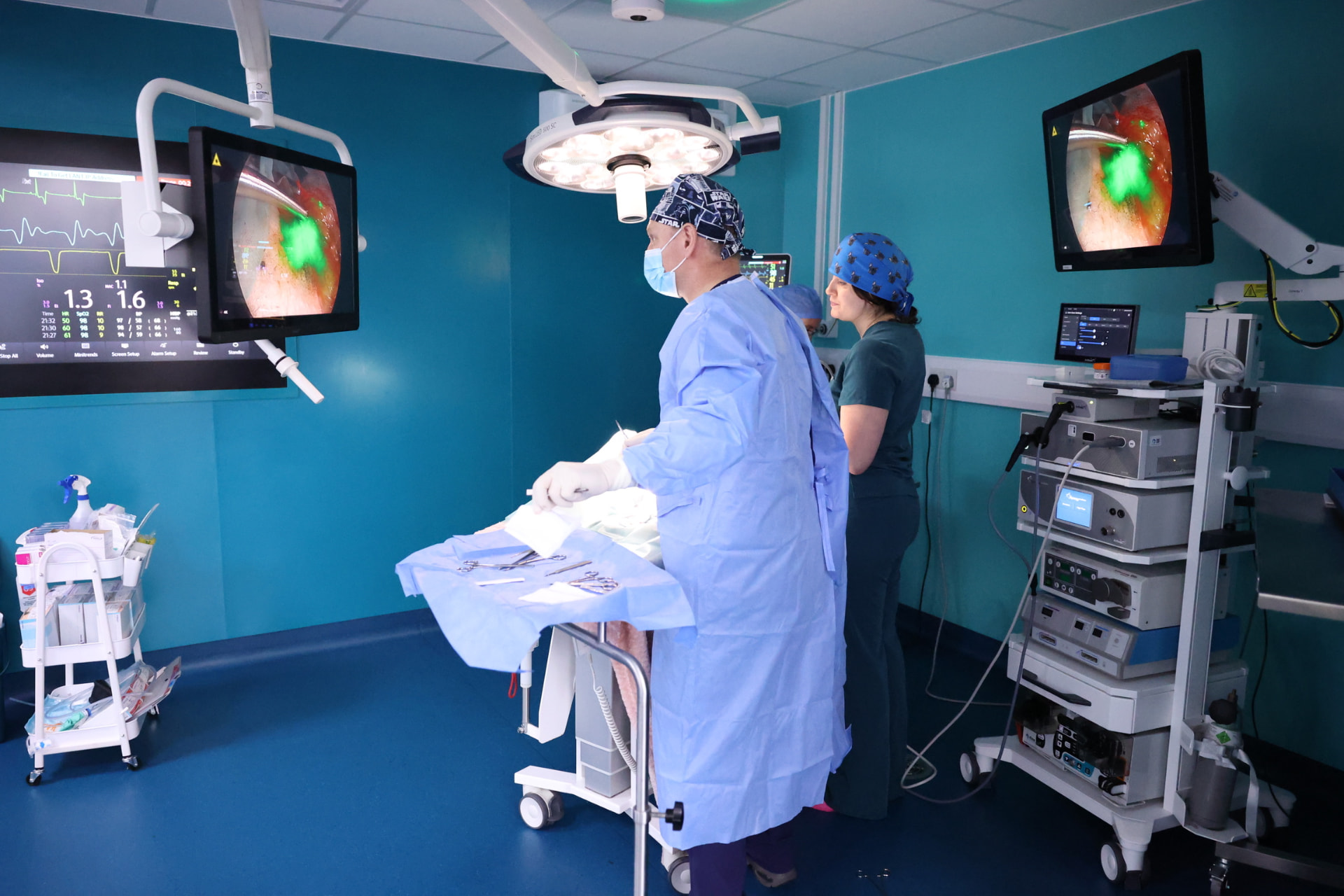
- A camera examination of the inside of the nose under general anaesthetic. It allows the vet to look directly, remove some foreign objects and take samples.
- Samples for the laboratory
- Small tissue samples (biopsies) or swabs can help identify inflammation, infection or a growth.
Video placeholder
Explained video: what a vet looks for inside the nose
Why a camera examination isn't always the first step
Rhinoscopy can be very helpful, but it needs a general anaesthetic and it isn't needed for every sneezing dog. Many dogs improve with simpler measures, or the cause becomes clear from the history and examination.
When further investigation is recommended, imaging such as CT is often carried out before rhinoscopy — usually during the same anaesthetic. This is because taking samples can cause some bleeding, which could make the scan harder to interpret.
A balanced view
Weighing it up: investigating persistent sneezing
Every option has trade-offs. What’s right depends on your pet, and is best decided with your vet.
Potential benefits
- Can help identify a cause, so treatment is targeted rather than trial-and-error
- Some foreign objects can be found and removed during rhinoscopy
- Results can help you and your vet plan realistically
Risks
- CT and rhinoscopy usually need a general anaesthetic, which always carries some risk
- Some sneezing or a mild nosebleed is common for a short time after samples are taken
Limitations
- Not every cause can be seen, even with a CT scan and camera
- Sample results can sometimes be non-specific or inconclusive
- Tests may need to be repeated or combined to build a full picture
Alternatives
- Monitoring with a planned check-up, if your vet feels this is safe
- Treatment based on the most likely cause, with review
- X-rays or a dental examination before more advanced imaging
Questions to ask your vet
You might find it helpful to note these down before your appointment.
- 01What do you think are the most likely causes for my dog?
- 02Is it safe to monitor for now, and what should prompt me to call you sooner?
- 03Which test would you suggest first, and what question will it answer?
- 04Would my dog need a general anaesthetic or sedation?
- 05If the tests don't find a cause, what would we do next?
- 06Would you recommend referral, and what would that involve?
References
References will be added here following clinical review. We only list sources that have been checked.
Who wrote and reviewed this
- Written by
- To be added once verified
- Clinically reviewed by
- To be added once verified
- Review date
- To be added once verified
Pet Care Explained is produced by Vetemis Referrals. Learn about investigations at Vetemis(opens vetemis.co.uk)
Related guides
Rhinoscopy explained: looking inside the nose
What happens during a camera examination of the nose, what it can and can't show, and what to expect on the day.
CT, ultrasound and endoscopy: why might different tests be needed?
A plain-language comparison of three common investigations, and why your vet might suggest more than one.
Endoscopy explained: what can a camera examination tell us?
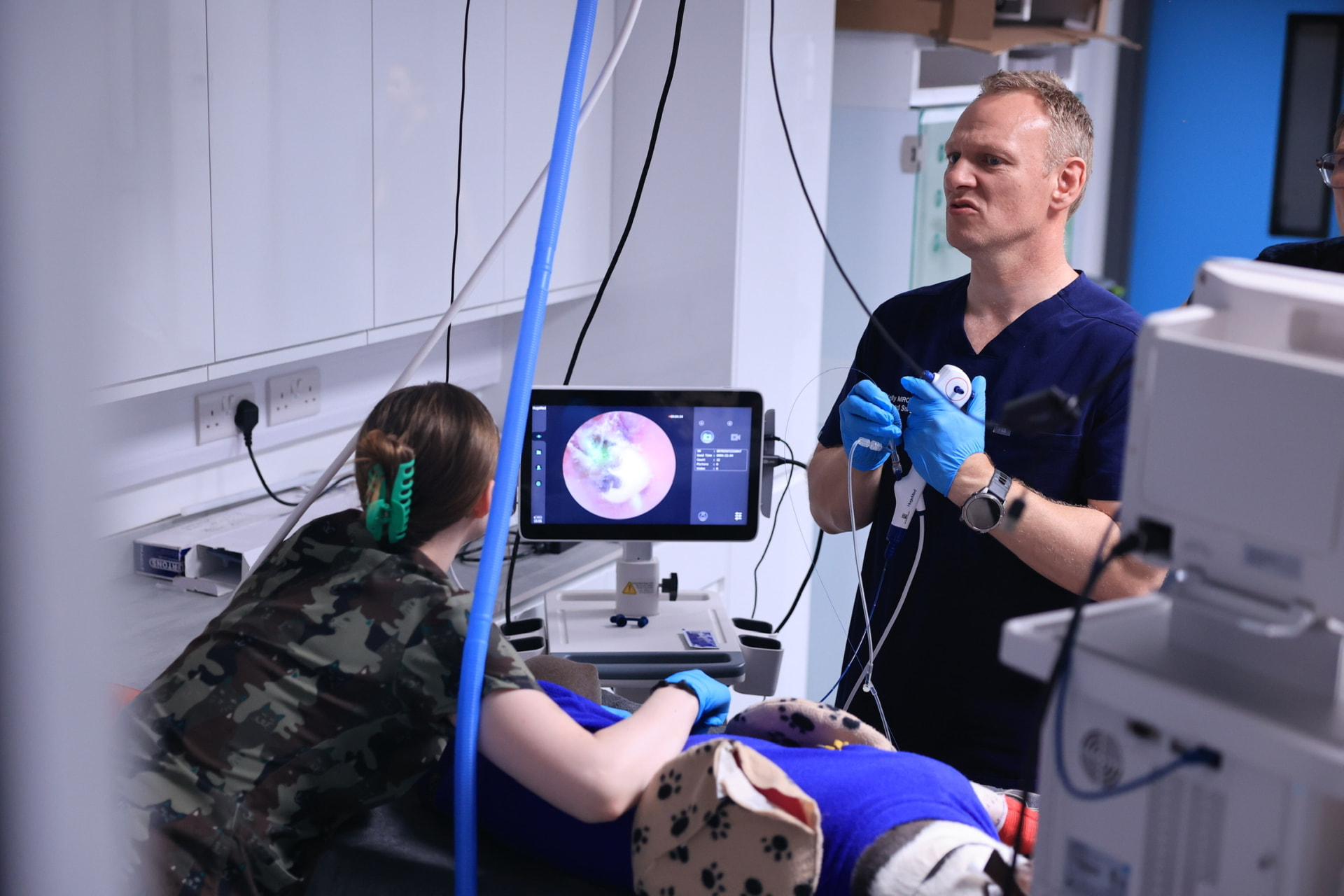
How a camera examination of the gut works, what it can reveal, and the questions it can't answer on its own.