Procedure explained · Keyhole surgery
Keyhole spay explained: questions to ask your vet
A keyhole (laparoscopic) spay removes the ovaries — and sometimes the womb — using a camera and instruments passed through small incisions, rather than one larger opening. It may mean a smaller wound and less tissue handling, but it is still surgery under general anaesthetic, and it isn't necessarily the right choice for every dog. It's worth talking through the options with your vet.
Draft — awaiting clinical review. This guide is an introductory draft. It hasn’t yet been approved by a named clinical reviewer and is hidden from search engines until it has.
How a traditional spay is usually done
Spaying is the surgical neutering of a female animal. In a traditional ('open') spay, the vet makes an incision in the abdomen and removes the ovaries and usually the womb (an ovariohysterectomy). Some vets remove only the ovaries (an ovariectomy). Open spays are very commonly performed and are an established, effective procedure.
What is a keyhole spay?
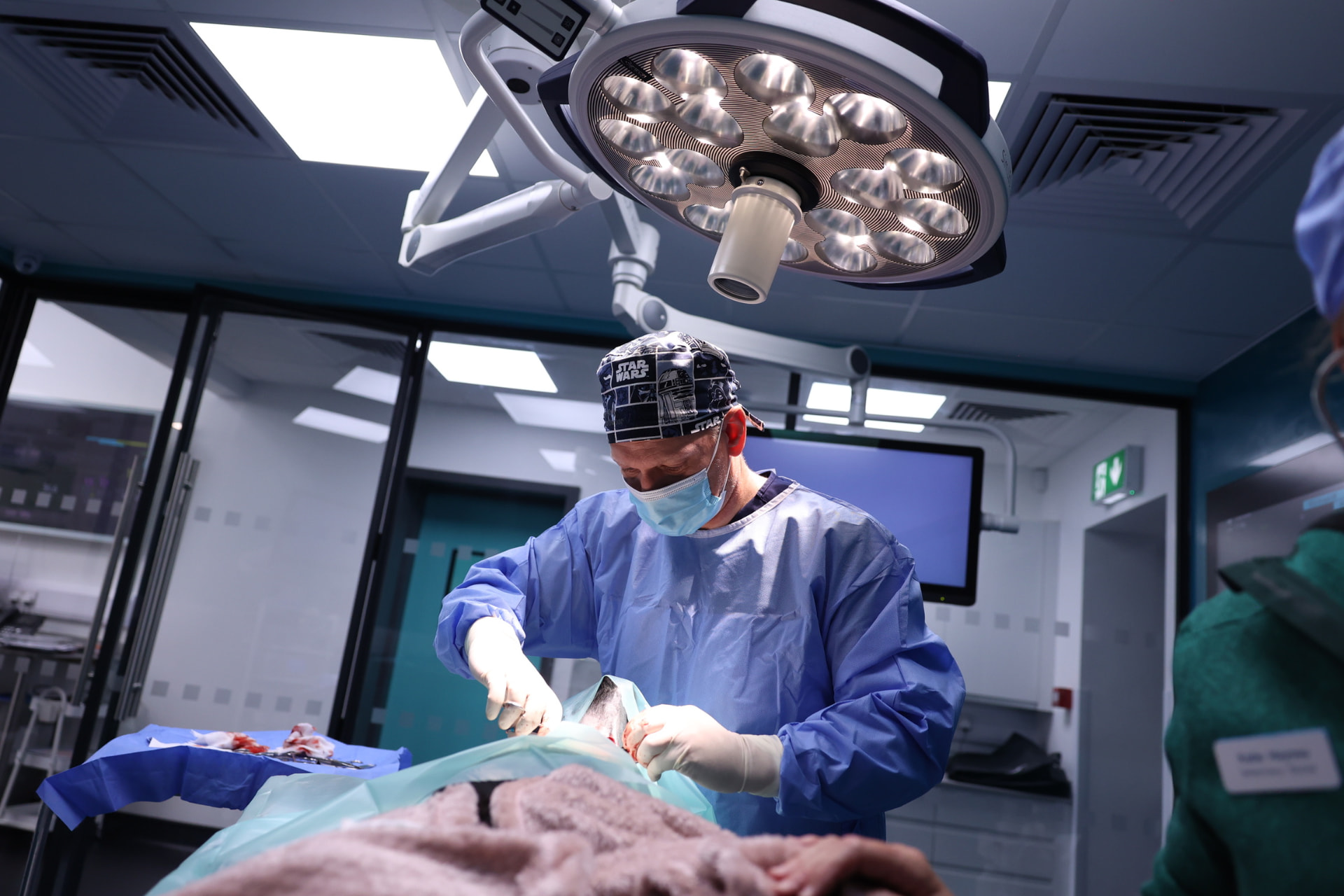
In a keyhole spay, the abdomen is gently inflated with gas to create space. A camera (laparoscope) and slim instruments are passed through one to three small incisions. The vet watches a magnified view on a screen while removing the ovaries. In most keyhole spays, the womb is left in place — this is a laparoscopic ovariectomy.
Image placeholder
Keyhole surgery diagram
Potential benefits
- Smaller incisions
- A magnified, well-lit view of the organs
- Less handling and stretching of tissue
- It may be associated with less discomfort after surgery for some dogs — your vet can talk you through the current evidence
Even with smaller wounds, your dog will still need rest, restricted exercise and wound checks while they recover. Your vet will give specific aftercare instructions.
Limitations and risks
- It is still surgery under general anaesthetic, with the risks that this involves
- Possible complications include bleeding, wound problems and, occasionally, the need to convert to open surgery
- It requires specialist equipment and training, so it isn't offered everywhere
- It's often more expensive than an open spay
- It may not be suitable for very small dogs, or for dogs with certain health conditions or abnormalities of the womb
What about cats?
In the UK, cats are commonly spayed through a small incision on the flank or the underside. Keyhole spays are less commonly performed in cats. Your vet can explain which approach they use and why.
Timing and other decisions
When to spay depends on things like your dog's breed, size, age and health, and the timing of her seasons. Recommendations vary, so it's best to talk this through with your own vet.
A balanced view
Weighing it up: keyhole spay compared with an open spay
Every option has trade-offs. What’s right depends on your pet, and is best decided with your vet.
Potential benefits
- Smaller incisions and a magnified view
- Less tissue handling
- May be associated with less post-operative discomfort for some dogs
Risks
- General anaesthetic risks apply to both methods
- Bleeding, wound complications, or conversion to open surgery
- Rare complications related to inflating the abdomen with gas
Limitations
- Not available at every practice
- Usually more expensive
- Not suitable for every dog
- Recovery still requires rest and restricted activity
Alternatives
- Traditional open spay
- Delaying or not neutering, after discussing the health implications with your vet
Questions to ask your vet
You might find it helpful to note these down before your appointment.
- 01Do you offer keyhole spays, or could you refer us?
- 02Would you remove only the ovaries, or the womb as well — and why?
- 03Is my dog a suitable candidate given her size, age and health?
- 04What would happen if the procedure needed to be converted to open surgery?
- 05What aftercare and exercise restrictions would be needed?
- 06What is the best timing for my dog?
References
References will be added here following clinical review. We only list sources that have been checked.
Who wrote and reviewed this
- Written by
- To be added once verified
- Clinically reviewed by
- To be added once verified
- Review date
- To be added once verified
Pet Care Explained is produced by Vetemis Referrals. Learn about keyhole surgery at Vetemis(opens vetemis.co.uk)
Related guides

Bladder stones: understanding investigation and treatment options
Signs of bladder stones, how vets investigate them, and the range of treatment options — from diet to surgery.
CT, ultrasound and endoscopy: why might different tests be needed?
A plain-language comparison of three common investigations, and why your vet might suggest more than one.
Endoscopy explained: what can a camera examination tell us?
How a camera examination of the gut works, what it can reveal, and the questions it can't answer on its own.